

TODRH is the horizontal distance required between the start of the take-off and the point at which the VTOSS is achieved at a height of at least:
-
A
35 ft above the take-off surface and a positive or zero climb gradient, in case of failure of the critical engine.
-
B
15 ft above the take-off surface and a positive climb gradient, in case of failure of the critical engine.
-
C
35 ft above the take-off surface and a positive climb gradient, in case of failure of the critical engine.
-
D
50 ft above the take-off surface and a positive or zero climb gradient, in case of failure of the critical engine.
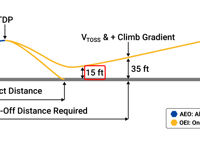
Refer to figure.
According to EASA AIR OPS:
- Take-off distance required (TODRH) means the horizontal distance required from the start of the take-off to the point at which take-off safety speed (VTOSS), a selected height and a positive climb gradient are achieved, following failure of the critical engine being recognised at the TDP, the remaining engines operating within approved operating limits. At the end of the TODRH, this selected height must be 10.7 m (35 ft) from the take-off surface or the highest obstacle within the TODRH.
- Take-off decision Point (TDP) is the first point from which a continued take-off capability is assured within the TODAH and is the last point in the take-off path which a rejected take-off is assured within the Rejected Take-off Distance Available (RTODAH).
Your Notes (not visible to others)
This question has appeared on the real examination, you can find the related countries below.
-
United Kingdom3
-
Norway2
-
Pakistan1


 Use Keyboard Shortcuts
Use your keyboard for faster navigation
