

-
A
biological cycle controlled by a 24-hour internal clock in the brain that regulates behavioural and physiological changes.
-
B
physiological state in which there is a decreased capacity to perform cognitive tasks and an increased variability in performance.
-
C
natural drive to sleep that increases as the day progresses, and which also affects the ability to sustain attention.
-
D
period of impaired cognitive performance and reduced vigilance following awakening from a regular sleep episode.
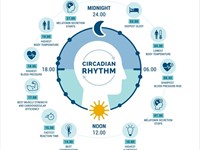
Refer to figure.
CIRCADIAN RHYTHMS
Circadian Rhythm is a natural, internal process that regulates the sleep–wake cycle. In normal conditions our circadian rhythms are locked to 24 hours by external time cues (zeitgebers). These cues are provided by clock times and other external events, such as, the sun rising, light and darkness, etc, all of which assist in the regulation of our internal biological clock.
If an individual is isolated from these zeitgebers, without clocks or any way of detecting light changes, the circadian rhythms will “free run” to a periodicity of about 25 hours. This means that an average individual, if isolated from these cues, instead of working to an average 16 hours awake and 8 hours sleep, will extend his/her day to 17 hours awake, 8 hours sleep.
Your Notes (not visible to others)
This question has appeared on the real examination, you can find the related countries below.
-
United Kingdom46
-
Austro Control44
-
France19
-
Poland19
-
Germany11
-
Ireland10
-
Spain9
-
Czech Republic6
-
Sweden6
-
Italy5
-
Norway5
-
Hungary4
-
Greece3
-
Latvia3
-
Lithuania3
-
Portugal3
-
Romania3
-
Bulgaria2
-
Slovakia2
-
Switzerland2
-
Luxembourg1
-
Malta1
-
Netherlands1
-
Pakistan1
-
Slovenia1
-
Thailand1


 Use Keyboard Shortcuts
