

What action should a pilot take in response to a TCAS RA?
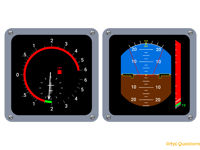
Refer to figure.
EASA learning objective 022.12.10.01.18 states: 'Explain the indications of a TA and an RA and how an RA will generate a red area on the VSI. Some variants will also include a green area. To manoeuvre the aircraft to comply with the RA, the pilot should ‘avoid the red’ or ‘fly the green’'.
EFIS equipped aircraft display TCAS traffic on the ND, non EFIS equipped aircraft display TCAS traffic on an electronic VSI (EVSI). When an intruding aircraft with a Mode C or S transponder poses a collision threat a TCAS II system will generate a resoultion advisory (RA) which commands a manoeuvre in the vertical plane when necessary. TCAS II RA commands are aural ('climb...', 'descend...' etc) and visual, with required rates of climb and descent being displayed to the pilot on the EVSI or the PFD vertical speed tape.
A red arc on the VSI scale indicates climb and descent rates to be avoided during an RA. A green arc represents the recommended vertical speed to be maintained during an RA.
RA commands must be followed, no ATC clearance is required, RA's override ATC instructions. As the LO says: 'Avoid the Red' or 'Fly the Green.'
Set THR CLB and keep the airspeed in the green area on the ASI --> INCORRECT. RA vertical commands are displayed on the VSI not the ASI.
Avoid the red area on the VSI to prevent collision with conflicting traffic --> CORRECT. The TCAS computer displays a red area on the VSI indicating the vertical rates to be avoided until clear of the conflicting traffic.
Set TOGA thrust and climb at maximum rate --> INCORRECT. TCAS commands could just as easily be descend or maintain level.
Maintain level flight --> INCORRECT. TCAS may also command a climb or descent
Your Notes (not visible to others)
This question has appeared on the real examination, you can find the related countries below.
-
Germany6
-
Austro Control2
-
Czech Republic2
-
Greece1
-
Ireland1
-
Spain1


 Use Keyboard Shortcuts
