

Which instrument is dependable during a whiteout effect?
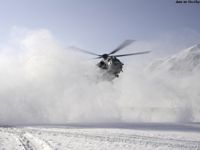
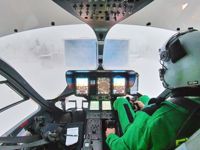
Refer to figures.
Generally, flying helicopters during winter presents unique challenges.
It is of utmost importance that every pilot adheres to a well-developed set of flight preparation routines, as these are key to your safety during winter flying.
In addition, special attention must be paid to the following points:
- Weather and routing (ceilings, visibility, wind).
- Local airfield/heliport conditions (departure, destination, possible alternates).
- VFR navigation landmarks in winter are markedly different from those encountered in the summer, necessitating a thorough understanding of these changes.
Furthermore, before the flight, it shall be ensured that the aircraft can fly in winter conditions.
More specifically, flying in snow constitutes a significant challenge. Some basic rules are:
- Low altitude flying over snow-covered surfaces without visual references MUST BE AVOIDED, as optical illusions may occur since snow affects the pilot’s visibility due to reduced contrast and depth perception.
- Flying into heavy snow showers and other severe Degraded Visual Environment conditions is not recommended.
- If ground and horizon can't be distinguished, turning around or landing must be considered.
- If white-out occurs during flight, speed should be reduced, a 180-degree turn should be made, instruments should be used to maintain control over the helicopter, and visual references should be recovered.
As far as approach and landing in snowy terrain are concerned :
- Never attempt to land without visual references, and utilize landing lights when available.
- To prevent self-induced white-out, pause in a high hover and attempt to blow the snow away. Beware that snow may suddenly recirculate when the helicopter is close to the ground.
- If you cannot blow the snow away, don’t land.
- If you must land there, know the landing site, and have been trained for it, you can fast approach and touch down with a slightly forward movement and avoid low hovering. Turn the nose of the helicopter so the reference is always visible and fly close to it.
- Remember! The radio altimeter is dependable when hovering into a whiteout effect.
Your Notes (not visible to others)
This question has appeared on the real examination, you can find the related countries below.
-
France1
-
Lithuania1
-
Norway1
-
United Kingdom1


 Use Keyboard Shortcuts
