

When landing behind a HEAVY airplane, what flight path should the helicopter commander follow?
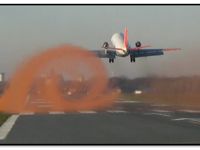
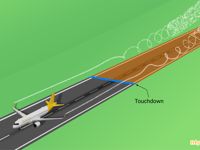
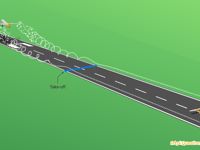
Refer to figures.
Every aircraft produces wake turbulence whilst producing lift.
Wake turbulence is present from take-off as the aircraft rotates (rotation), and on the final, it does not end until the aircraft nose goes down on the landing roll (touchdown point).
The vortices generated sink slowly downwards and outwards (in calm conditions). They are most dangerous to the following aircraft during the take-off, initial climb, final approach, and landing phases of the flight.
Specifically, the critical area to avoid lies approximately 500-1000 ft below the airplane flight path and extends roughly to an area 2 x wing span laterally and 1 x wingspan vertically.
Thus, to avoid the vortices, the helicopter pilot should adopt a flight path at or above the airplane and land beyond the airplane touchdown point.
Your Notes (not visible to others)
This question has appeared on the real examination, you can find the related countries below.
-
France1


 Use Keyboard Shortcuts
