

According to CS 25, the worst effect of a major failure on an aeroplane is..
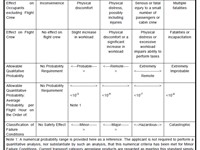
Refer to the figure
For these type of questions, you need to know the 5 different safety effects according to CS-25. The table in the annex comes from CS-25 and should help you learn each of the safety effects.
As you can see “a significant reduction in functional capabilities or safety margins” is classified as a major failure
For these type of questions, you need to know the 5 different safety effects according to CS-25. The table in the annex comes from CS-25 and should help you learn each of the safety effects.
As you can see “a significant reduction in functional capabilities or safety margins” is classified as a major failure
Your Notes (not visible to others)
This question has appeared on the real examination, you can find the related countries below.
-
Greece3
-
Austro Control2
-
Poland2
-
Slovakia2
-
Czech Republic1
-
Ireland1
-
United Kingdom1


 Use Keyboard Shortcuts
Use your keyboard for faster navigation
