

-
A
Squawk 7700 and continue in accordance with the flight plan.
-
B
Continue in VMC to the destination aerodrome and land within 30 min after the estimated time of arrival in the flight plan.
-
C
Continue in VMC, land at the nearest suitable aerodrome and report your arrival to the appropriate air traffic control unit.
-
D
Continue to the destination aerodrome, adding 500 ft to all the altitudes in the flight plan.
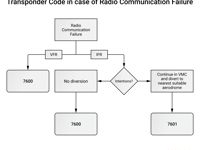
Refer to figure.
Note: Under the latest Standardised European Rules of the Air (SERA), in the event of lost comms, there is a new squawk code:
- VFR = Squawk 7600
- IFR and continuing with your IFR flight – even if you’re in VMC = Squawk 7600
- IFR in VMC and you decide to land at the nearest suitable airport instead of continuing the flight = Squawk 7601 This new code informs ATC that you are diverting and so they can plan your separation.
ICAO Doc 4444
15.3 AIR-GROUND COMMUNICATIONS FAILURE
15.3.3 If the aircraft fails to indicate that it is able to receive and acknowledge transmissions, separation shall be maintained between the aircraft having the communication failure and other aircraft, based on the assumption that the aircraft will:
a) if in visual meteorological conditions:
1) continue to fly in visual meteorological conditions;
2) land at the nearest suitable aerodrome; and
3) report its arrival by the most expeditious means to the appropriate air traffic control unit.
Your Notes (not visible to others)
This question has appeared on the real examination, you can find the related countries below.
-
Austro Control2
-
Lithuania1
-
Malaysia1
-
Poland1


 Use Keyboard Shortcuts
