

The horizontal command bar of a flight director:
1 – repeats the position information given by the ILS in the horizontal plane
2 – repeats the position information given by the ILS in the vertical plane
3 – supplies information about the direction and magnitude of the corrections to be applied to the pitch angle of the aircraft
The combination that regroups all of the correct statements is:
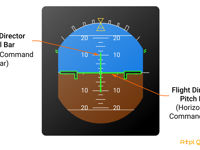
Refer to figure.
The flight directors provide information for the pilot to join a desired path with the optimum attitude. Flight director information supplied by an FD computer is presented in the form of command bars on the Attitude Director Indicator (ADI).
The vertical command bar of the FD supplies information about the direction and magnitude of the corrections to be applied to the bank angle of the aircraft. The vertical bar is always associated with the roll channel.
The horizontal command bar of the FD supplies information about the direction and magnitude of the corrections to be applied to the pitch angle of the aircraft. The horizontal bar is always associated with the pitch channel.
Your Notes (not visible to others)
This question has appeared on the real examination, you can find the related countries below.
-
Austro Control6
-
Lithuania2
-
Poland2
-
Czech Republic1


 Use Keyboard Shortcuts
