

An uphill slope…
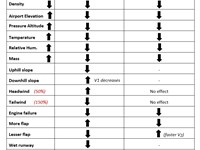
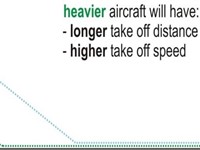
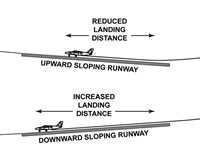
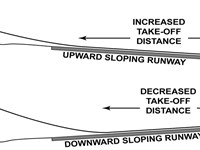
Refer to figures.
If the runway is sloping, a component of the weight acts along the runway and increases or decreases the acceleration force.A downhill slope increases the accelerating force, and therefore reduces the takeoff distance required, whereas an uphill slope reduces the accelerating force and increases the takeoff distance.
In most cases the published aeroplane performance data gives take-off and landing distance assuming a level runway.In the case of a sloping runway the effect of gravity will be to shorten the take-off run required (TORR) and the take-off distance required (TODR) when the slope is downhill.An uphill slope will provide the opposite effect, increasing TORR and TODR.
In the case of landing a downhill sloping runway will extend the landing distance required (LDR), whereas an uphill slope will decrease it.
Consequently, it may be necessary to reduce the aircraft weight for an uphill take-off or a downhill landing.It should also be borne in mind that, as with the landing case, an abandoned take-off will require a greater stopping distance on a down- sloping runway.
Your Notes (not visible to others)
This question has appeared on the real examination, you can find the related countries below.
-
United Kingdom10
-
Hong Kong5
-
Pakistan2
-
Austro Control1
-
Denmark1
-
Hungary1
-
Malaysia1
-
Poland1


 Use Keyboard Shortcuts
