

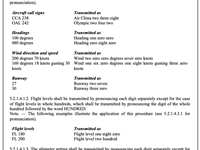
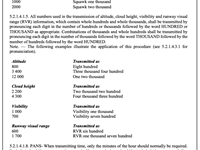
Refer to figures.
There are two items to remember with these time questions:
- Time is given using UTC.
- Use the 24 hour clock.
Looking at the answer options:
Time check three seven UTC → INCORRECT. There is no need to say ‘UTC’
Time two three three seven → CORRECT. Although no mention is made in the question about possible confusion, the hour has been included. This is still a correct option and the only possible answer here without some aspect of incorrect phraseology.
Time one one three seven papa mike → INCORRECT. ‘Papa mike’ is not correct phraseology
Time check two three three seven UTC → INCORRECT. There is no need to say ‘UTC’
ICAO Annex 10 — Aeronautical Telecommunications
Chapter 5
5.2.1.4.1.8. PANS- When transmitting time, only the minutes of the hour should normally be required. Each digit should be pronounced separately. However, the hour should be included when any possibility of confusion is likely to result.
Note: The following examples illustrate the application of this procedure (see 5.2.1.4.3.1 for pronunciation).
| Time | Statement |
| 0920 (09:20 A.M) | TOO ZE-RO or ZE-RO NIN-er TOO ZE-RO |
| 1643 (4:43 P.M) | FOW-er TREE or WUN SIX FOW-er TREE |
- 23:37 => TREE SEV-en or TWO TREE TREE SEV-en
Your Notes (not visible to others)
This question has appeared on the real examination, you can find the related countries below.
-
United Kingdom15
-
Hong Kong6
-
Pakistan5
-
Austro Control4
-
Poland2
-
Germany1


 Use Keyboard Shortcuts
