

What are the typical control channels of a three axis autopilot?
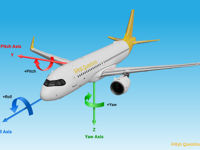
Refer to figure.
EASA learning objective 022.06.02.01.01 states: 'Define the three basic control channels.'
EASA learning objective 022.06.02.01.02 states: 'Define the three different types of autopilots: single or 1 axis (roll); 2 axes (pitch and roll); 3 axes (pitch, roll and yaw).'
Autopilot systems are designed to reduce the workload of the pilot by automatically providing stabilising and guidance functions which allows the pilot to carry out other management and monitoring tasks. To be able to control the aircraft an autopilot must have, depending on the type of system, control channels in the appropriate aircraft axis (Pitch, Roll, Yaw)
Single Axis System
A single channel autopilot, controls the aircraft in roll only via the ailerons. A basic system found in small aircraft, known as a 'wing leveller'
2-Axis System
Controls the aircraft in pitch and roll, one channel controls the ailerons the other the elevator. Common in light aircraft and can maintain heading and altitude.
3-Axis system
Primarily controls the aircraft in pitch and roll via the elevators and ailerons with the addition of the rudder for control of yaw . All modern civil air transport aircraft use a 3 axis system as, for example, control of yaw is essential for autoland.
Elevator, Aileron, Rudder → CORRECT. A 3 axis autopilot controls the aircraft in pitch roll and yaw, this control is provided by the elevator, ailerons and rudder.(Note: Some exam authorities substitute this correct option with Pitch, Roll and Yaw which is technically more correct when describing control channels. )
Flaps, Ailerons, Elevator → INCORRECT. Flaps are not controlled by the autopilot.
Pitch trim, Aileron Trim, Yaw Trim → INCORRECT. An aircraft is not controlled by trim, autopilots have no control over rudder and aileron trim.
Altitude, Speed, Heading → INCORRECT. Altitude is controlled by pitch, speed is controlled by pitch or thrust, heading is controlled by roll.
Your Notes (not visible to others)
This question has appeared on the real examination, you can find the related countries below.
-
France49
-
Austro Control20
-
Poland14
-
Greece11
-
Sweden8
-
Portugal6
-
Germany5
-
Italy5
-
Spain5
-
Hungary4
-
Czech Republic3
-
Ireland3
-
Hong Kong2
-
Romania2
-
Finland1
-
Iceland1
-
Norway1
-
Serbia1
-
Slovakia1
-
Switzerland1


 Use Keyboard Shortcuts
