

The flight director command bars provide the pilot with corrections to apply to…
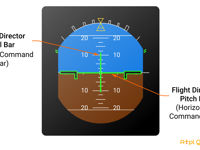
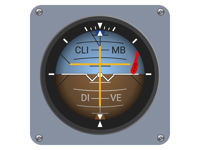
Refer to figures.
EASA learning objective 022.06.03.01.06 states: 'Explain that the flight director computes and indicates the direction and magnitude of control inputs required in order to achieve an attitude to follow a trajectory.'
The FD computes and indicates the direction and magnitude of pitch and roll inputs required in order to achieve an attitude to follow a trajectory which achieves the programmed flight path selected by the pilots or automatically generated by the flight management computer (FMC). FD systems were originally invented to assist pilots in maintaining the localiser and glidepath on an ILS approach. Nowadays the FD is used more extensively for guidance during manual flying and for monitoring of the autopilot in automatic flight.
The horizontal pitch bar moves up and down to indicate the pitch angle required and the vertical roll bar moves left and right to indicate the direction and magnitude of bank angle required. When the pitch and bank angles are as required to satisfy the desired flight path, the FD will command zero rate of change.
Each pilot has their own FD with an associated on/off switch. It is standard operating procedure to have the FD's switched on when the autopilot is engaged to allow monitoring of the autopilot control inputs. Although it's also usual for the FD's to be used during manual flight, pilots may switch the FD off is they wish to practice ‘raw’ flying techniques.
Your Notes (not visible to others)
This question has appeared on the real examination, you can find the related countries below.
-
France9
-
Azerbaijan5
-
Spain5
-
United Kingdom4
-
Czech Republic2
-
Pakistan2
-
Poland2
-
Hong Kong1
-
Italy1


 Use Keyboard Shortcuts
