

Which combination of AFCS modes would have to be engaged to follow a vertical and horizontal flight path at a desired speed?
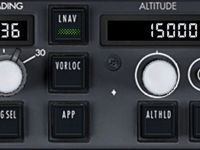
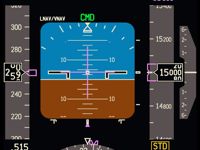
Refer to figures.
EASA learning objective 022.06.02.01.04 states: 'Explain the following lateral modes: heading (HDG)/track (TRK); VOR (VOR)/localiser (LOC); lateral navigation/managed navigation (LNAV or NAV).'
EASA learning objective 022.06.02.01.06 states 'Explain the following vertical modes: vertical speed (V/S); flight path angle (FPA); level change (LVL CHG)/open climb (OP CLB) or open descent (OP DES); speed reference system (SRS); altitude (ALT) hold; vertical navigation (VNAV)/managed climb (CLB) or descent (DES); glideslope.'
Automatic flight control systems (AFCS) are able to guide aircraft vertically and horizontally using various flight path modes. The answer refers to Boeing specific AFCS modes, so this explanation will exclude differently named Airbus modes.
Lateral Navigation - A function of the flight management system (FMS) that can guide the aircraft along a pre-programmed horizontal path. Autopilot Flight Director Systems (AFDS) have a selection of lateral (roll) modes, which can guide the aircraft laterally, one of which is called LNAV.
LNAV Mode - When engaged the flight management computer (FMC) controls AFDS roll commands to intercept and track the route inserted into the FMC by the pilots. This route can be modified in flight and includes SIDs, STARs and instrument approaches. When engaged LNAV will be annunciated on the FMA in green in the second column (roll) of the flight mode annunciator (FMA).
Vertical Navigation - More complex than lateral navigation and can include the control of pitch, airspeed, vertical speed and altitude to follow a a desired vertical flight path. AFDS have various vertical (pitch) modes, which can be used to guide the aircraft vertically, one of which is called VNAV.
VNAV Mode - When engaged the FMC controls AFDS pitch and autothrottle to follow the vertical profile input into the FMS by the pilots. This can include climb, cruise, descent, speed, and altitude constraints. When engaged VNAV SPD or VNAV PTH will be announciated in green in the third column of the FMA (pitch), depending on the stage of flight. N1, FMC SPD RETARD or ARM will be displayed in green in the 1st column (A/T) of the FMA depending on whether the aircraft is climbing, cruising or descending. The speed window on the MCP will be blank to indicate that the FMC has control of speed.
Therefore, for an automatic flight control system to follow a vertical and horizontal path at a desired speed LNAV and VNAV modes must be engaged.
NOTE:
- Flight Path Angle (FPA) and Vertical Speed (V/S) are mutually exclusive vertical modes, they cannot be engaged at the same time. Selection of V/S or FPA with Hdg would not control the airspeed without an autothrust mode.
- Speed and Altitude Hold would follow a vertical path at a desired speed but would need a lateral mode to follow a horizontal path.
- There's no such mode as 'Longitudinal Navigation!
Your Notes (not visible to others)
This question has appeared on the real examination, you can find the related countries below.
-
United Kingdom16
-
Austro Control6
-
France4
-
Germany2
-
Greece2
-
Italy2
-
Norway2
-
Poland2
-
Azerbaijan1
-
Lithuania1
-
Switzerland1


 Use Keyboard Shortcuts
