

A helicopter lacks a wind shear detection system. While initiating a final approach, the helicopter's airspeed begins to surge, leading the pilot to suspect the influence of a microburst. What actions should be taken in this scenario?
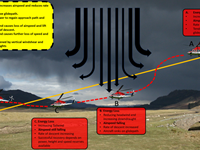
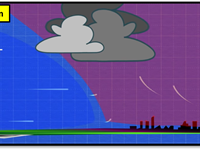
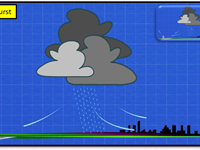
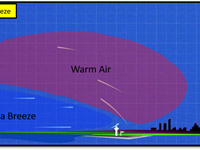
Refer to figures.
Windshear could be defined as an abrupt and localized change of wind velocity, that is strength, direction or both.
There can be several causes of low-level wind shear:
- The passage of the front in which the isobars change direction;
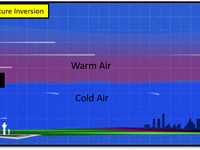
- A marked temperature inversion;
- Sea breeze;
- Topography and large buildings;
- Surface friction; and
- Cumulonimbus clouds, and their associated weather of heavy rain and hail, which can give rise to the phenomenon known as Microburst.
- First, the helicopter will meet a sudden increase of headwind, which will cause an increase in airspeed and a decrease in rate of descent, which takes the helicopter above the desired approach path.
- At the same time the helicopter enters a reducing headwind and increasing downdraft. A loss of energy leads to reduced airspeed, less lift and an even greater rate of descent.
- As the aircraft continues, the outflow from the microburst is now coming from behind and the increasing tailwind reduces the airspeed even more, accompanied by an increase in the descent rate.
- Acknowledge the presence of wind shear;
- Ascertain the extent of the change;
- Stay ready to promptly rectify the situation or execute a go-around maneuver.
Specifically in our case:
- The pilot lacks information.
- If the pilot takes no action, the situation will worsen.
- If the pilot pitches down, the helicopter will gain more airspeed, and the situation may become uncontrollable.
Your Notes (not visible to others)
This question has appeared on the real examination, you can find the related countries below.


 Use Keyboard Shortcuts
Use your keyboard for faster navigation
