

The Best Rate of Climb speed (VY) is the maximum altitude gained versus…
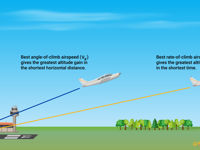
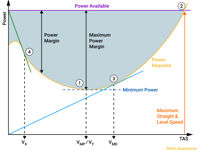
Refer to figures.
Best Rate of Climb Airspeed (VY) is the airspeed at which the helicopter has the best performance in ascent, where the helicopter has the biggest difference between power required and power available and gives the maximum altitude gained in the shortest time.
The greatest difference between power required and power available (maximum power margin) occurs at the lowest point of the power required curve, where the corresponding speed is the Minimum Power Airspeed (VMP).
Also, at the lowest point of the power required curve, the fuel consumption is at its minimum. Thus, the maximum endurance can be achieved and the corresponding speed is the VMAX END.
Therefore, the VY is also VMP and VMAX END.
Note: VY must not be mixed up with VX (Best Angle of Climb Airspeed). VX is defined as the airspeed at which the helicopter will achieve the best angle of climb. Vx speed is maintained during climb to clear obstacles and gives the greatest altitude gained in the shortest horizontal distance.
Your Notes (not visible to others)
This question has appeared on the real examination, you can find the related countries below.
-
Austro Control2
-
Norway1
-
Spain1


 Use Keyboard Shortcuts
