

The Mach Trim system…
-
A
compensates for the pitch up tendency at high Mach numbers.
-
B
adjust the horizontal stabiliser position during a high speed stall.
-
C
ensures optimum CG location by transferring fuel into the horizontal stabiliser.
-
D
increases the static longitudinal stability of an aeroplane by adjusting the horizontal stabiliser according to Mach number.
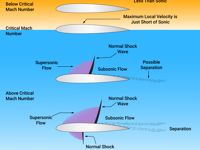
Refer to figure.
EASA learning objective 022.08.01.01.07 states: 'Define ‘Mach trim’ and state that the Mach-trim system can be independent.'
At high subsonic speeds aircraft will eventually reach a point where some airflow around the aircraft will reach supesonic speeds, this speed is known as Mcrit. Above Mcrit shockwaves will start to form causing turbulent airflow and the centre of pressure of the wing will start moving rearwards. This rearward centre of pressure movement coupled with airflow changes over the tailplane will cause a nose down pitching movement which will need to be counteracted to avoid speed instability or loss of control.
Mach trim is an automatic system which controls the tailplane trim to counteract this nose down tendency, it's a separate system so the autopilot doesn't need to be engaged for it to operate.
compensates for the pitch up tendency at high Mach numbers --> INCORRECT. It compensates for the pitch down tendency.
adjust the horizontal stabiliser position during a high speed stall --> INCORRECT. Mach Trim doesn't compensate for a high speed stall.
ensures optimum CG location by transferring fuel into the horizontal stabiliser --> INCORRECT. Mach trim is not used for adjusting the C of G
increases the static longitudinal stability of an aeroplane by adjusting the horizontal stabiliser according to Mach number --> CORRECT. The correction of the nose down pitching tendency by the Mach Trim increases longitudinal stability.
Your Notes (not visible to others)
This question has appeared on the real examination, you can find the related countries below.
-
Azerbaijan6
-
Austro Control3
-
Hong Kong2
-
Norway2
-
Portugal1


 Use Keyboard Shortcuts
