

RVR is reported in steps of _____ when the RVR is less than 400 m, and _____ when the RVR is 400 m or more but less than 800 m, and _____ when the RVR is 800 m or more.
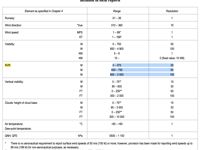
Refer to figure.
Runway visual range (RVR). The range over which the pilot of an aircraft on the centre line of a runway can see the runway surface markings or the lights delineating the runway or identifying its centre line.
In METARs, the RVR values are prefixed by the letter “R”, followed by the runway number for which the RVR value applies and the actual RVR value.
According to ICAO Annex 3, RVR is reported in steps of 25 m when the RVR is between 0 - 375 m (less than 400 m), 50 m when the RVR is between 400 - 750 m (less than 800 m) and 100 m when the RVR is between 800 - 2000 m (800 m or more).
Your Notes (not visible to others)
This question has appeared on the real examination, you can find the related countries below.
-
Austro Control118
-
Germany60
-
Ireland22
-
Greece15
-
Sweden15
-
Denmark11
-
Latvia10
-
Switzerland9
-
Lithuania7
-
Norway7
-
Finland6
-
Romania6
-
Malta5
-
Poland5
-
France3
-
United Kingdom3
-
Iceland2
-
Italy2
-
Luxembourg2
-
Spain2
-
Czech Republic1
-
Serbia1
-
Slovakia1
-
Slovenia1


 Use Keyboard Shortcuts
