

How does decreasing aircraft gross mass influence the optimum cruise altitude?
The optimum altitude…
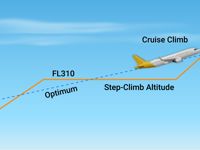
Refer to figure.
The optimum altitude is the altitude at which a jet aircraft achieves its best fuel efficiency. More specifically, it is where the Specific Range (SR) is highest, and the Specific Fuel Consumption (SFC) is lowest.
SFC is a measure of engine efficiency. For a jet engine, SFC = Fuel Flow (FF) / Thrust. This tells us how much fuel we have to burn to create useful thrust. Jet engines have been optimised so that they are most efficient during cruise flight, where air is very cold and thin, and the engines are running at a very high thrust setting (around 85% - 95% of maximum available thrust). That is, we need to be at a cruise altitude where the optimum thrust setting (let's say 90%) is equal to the thrust required at the best range speed → The optimum altitude depends on the thrust required.
As gross mass decreases, the thrust required for all airspeeds decreases. This is due to the decrease in AoA to maintain straight and level flight, and so a reduction in induced drag. As a result, at the same thrust setting, our airspeed would increase above the best range speed. So, in order to maintain the highest possible SR, we need to climb so that the optimum thrust setting = lower thrust required. In other words, the optimum altitude increases.
This is why aircraft sometimes use a “step climb”. The cruise may start at an altitude close to the optimum altitude, but over time, fuel consumption reduces the gross mass and increases the optimum altitude. The aircraft will then climb in order to be closer to the new optimum altitude, to improve fuel efficiency.
Your Notes (not visible to others)
This question has appeared on the real examination, you can find the related countries below.
-
France24
-
Austro Control14
-
Spain3
-
Greece2
-
Czech Republic1
-
Finland1
-
Germany1
-
Luxembourg1


 Use Keyboard Shortcuts
