

A piece of luggage was meant to be placed in the rear hold of a light twin aircraft, but was mistakenly placed in the forward hold. Which of the following is true for take-off?
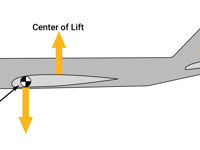
Refer to figure.
The luggage being placed in the forward hold, instead of where it was supposed to be placed (the aft hold) means that the aircraft's CG is actually further forward than the pilots are aware of. The location of an aircraft's CG is an important factor for many things, both for stability and control as well as for the aircraft's performance.
When the CG of an aircraft is further forward, the aircraft will be more nose heavy, and to counteract this, the tailplane provides a downforce on the tail in order to keep the nose of the aircraft up. This downforce directly opposes what the main wing is doing, producing lift. Therefore, the greater the downforce, the greater the lift that the main wing needs to produce. For every bit of lift the wing produces though, there is some induced drag that occurs, which means that further forward CG locations cause higher drag, and therefore lower climb performance, shorter aircraft range, and generally worse efficiency.
Your Notes (not visible to others)
This question has appeared on the real examination, you can find the related countries below.
-
Austro Control1
-
Poland1
-
United Kingdom1


 Use Keyboard Shortcuts
