

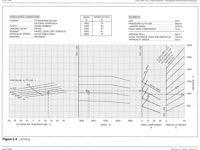
Refer to figure or CAP 698 Figure 2.4.
OAT: 18°C
Pressure altitude: 3000 ft
AMSL wind: 210°/10 kt
Mass: 3120 lb
Runway state: Wet paved
Using the annex, determine the ground roll distance of an SEP aircraft, landing on runway 15 in the following conditions.
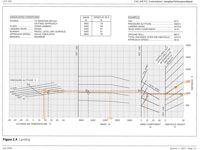
Refer to figure.
a) Enter at the ambient temperature of 18°C. Move vertically to the aerodrome pressure altitude of 3000 ft.
b) From this point, move horizontally right to the landing weight reference line. Parallel the grid lines to the appropriate landing mass input of 3120 lb.
c) Continue from this intersection to the wind component reference line. Parallel the grid lines to the appropriate wind component input:
- On RWY 15 with a wind of 210/10. Cos 60 x 10 kt = 5 kt headwind
d) Travel horizontally right to the ground roll reference line. Either continue horizontally to the right vertical axis to read the ground roll distance or parallel the grid lines to the right vertical axis to read the landing distance from 50 ft. This question asks for the ground distance only: 970 ft
- If the METAR or TAF or combination of both indicate that the runway may be wet at the estimated time of arrival, the ground roll should be multiplied by a factor of 1.15:
Ground roll = 970 ft
Condition factor = 15%
970 ft x 1.15 = 1115 ft
Your Notes (not visible to others)
This question has appeared on the real examination, you can find the related countries below.
-
Spain3
-
Pakistan1
-
Poland1
-
United Kingdom1


 Use Keyboard Shortcuts
