

Some aeroplanes experience natural buffet whilst in a pre-stall condition. What causes this?
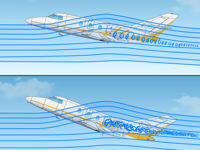
Refer to figure.
The buffet experienced by some aircraft just before the stall comes from the fact that some of the wing has already begun to stall, and the boundary layer has separated from the wing (usually near the wing root) close to the trailing edge on the upper side. The area behind the separation point is now stalled, incredibly turbulent airflow, and this flows backwards with the rest of the airflow, hitting the horizontal stabiliser (tailplane). This highly turbulent, stalled airflow hitting the tailplane and elevator is the primary cause of the natural buffeting felt in some aeroplanes. If an aircraft does not present with natural buffeting before the stall, then stall warners or stick shakers will be fitted to warn of the impending stall.
As for the other options:
- The centre of pressure does move aft during the stall of most wings, which helps provide the necessary pitch down moment to break the stall and begin recovery, however, it is not the cause of any buffeting.
- A stall occurring over the section of the wing with ailerons would cause aileron buffeting through the controls, but this means the wing is completely stalled, not pre-stall, as the wing root is designed to stall first, and the wing tips are designed to stall last, to preserve aileron effectiveness in the stall and prevent wing drops.
Your Notes (not visible to others)
This question has appeared on the real examination, you can find the related countries below.
-
Austro Control19
-
France18
-
Germany10
-
Czech Republic3
-
Ireland3
-
Greece2
-
Malta2
-
Poland2
-
Serbia2
-
Slovakia2
-
Iceland1
-
Romania1
-
Spain1
-
Sweden1
-
United Kingdom1


 Use Keyboard Shortcuts
