

In a regular aircraft, which of the following are common characteristics that indicate a stall?
1. Aerodynamic buffeting
2. Yawing
3. Lack of elevator effectiveness
4. Aileron reversal
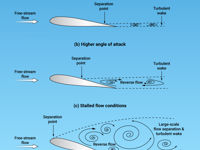
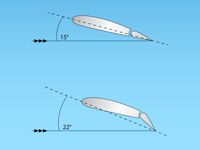
Refer to figures.
Note: We have limited feedback about this question from the real exams, and no feedback on the correct answer in the exam, so please do let us know in the comments if you see this question in the real exam, and anything you can remember from it, thanks!
A stall occurs when an aerofoil exceeds its critical angle of attack. This leads to separation of the upper boundary layer, and a large reduction in CL and lift. For larger aeroplanes, the CL - alpha curve tends to be a lot shallower, making it less obvious when a stall is occurring. As such, we can also define an impending stall based on any combination of the following signs:
- A changing pitching moment (nose down for a swept wing, nose up for mst non-swept wings)
- Buffet onset; deterrent buffet
- lack of pitch authority
- uncommanded pitch down
- uncommanded roll.
Also CS 25.201 defines a stall as any combination of the following:
- A nose down pitch that can not be readily arrested
- Buffeting, of a magnitude and severity that is a strong and effective deterrent to further speed reduction; or
- The pitch control reaches the aft stop and no further increase in pitch attitude occurs when the control is held full aft for a short time before recovery is initiated.
Therefore, the lack of pitch authority caused by disrupted airflow over the tailplane and elevator, as well as the aerodynamic buffeting we experience due to this turbulent wake are the correct options. “Aileron reversal” is definitely possible, which leads to uncommanded roll, although this is less common than the other two options. Yawing typically does not occur.
Your Notes (not visible to others)
This question has appeared on the real examination, you can find the related countries below.
-
Poland4
-
United Kingdom4
-
Ireland1
-
Norway1


 Use Keyboard Shortcuts
