

The Flight Mode Annunciator..
-
A
instructs the Autopilot system to perform the required control movements.
-
B
instructs the Flight Director system to perform the required control movements.
-
C
indicates the proper operation of the Yaw Damper system.
-
D
is the only reliable source of information about which Autopilot and Flight Director functions are in use.
The FMA is usually located on the top of the PFD and displays the active and the armed modes of the autopilot and auto-thrust (or auto-throttle) system. The flight crew uses this system to check and confirm any selection made on the autopilot control panel.
From left to right, the FMA indicates the:
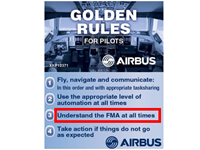
The FMA is the only reliable source about which AP/FD modes are in use because any mode becomes active/armed only if it is displayed on the FMA. The third Airbus Golden Rules for pilots is ‘Understand the FMA at all times’ which is primordial to safely operate your aircraft. You will notice sometimes during very complex simulator sessions that even though those golden rules are ‘easy’ and obvious, they are not always respected (even by experienced pilots) which results in unnecessary errors and mistakes.
From left to right, the FMA indicates the:
- Auto-thrust mode and auto brake modes (on more complex aircraft such as the A350).
- Autopilot/FD vertical modes.
- Autopilot/FD lateral modes.
- Approach capabilities (=autoland capabilities) and autopilot designator (1, 2, 1+2) and auto-thrust engagement status.
The FMA is the only reliable source about which AP/FD modes are in use because any mode becomes active/armed only if it is displayed on the FMA. The third Airbus Golden Rules for pilots is ‘Understand the FMA at all times’ which is primordial to safely operate your aircraft. You will notice sometimes during very complex simulator sessions that even though those golden rules are ‘easy’ and obvious, they are not always respected (even by experienced pilots) which results in unnecessary errors and mistakes.
Your Notes (not visible to others)
This question has appeared on the real examination, you can find the related countries below.
-
Malaysia1


 Use Keyboard Shortcuts
Use your keyboard for faster navigation
