

How do pressure patterns at around 18 000 feet (5500 m) compare to those at the surface?
-
A
The pressure patterns (H or L) can be similar to 18 000 ft, but may also be compensated by differences in humidity.
-
B
The pressure patterns (H or L) can be similar to 18 000 ft, but may also be compensated by high wind speeds.
-
C
The pressure patterns (H or L) can be similar to 18 000 ft, but may also be compensated by differences in temperature.
-
D
The pressure patterns must be different due to increasing temperatures from 18 000 ft altitude to ground level.
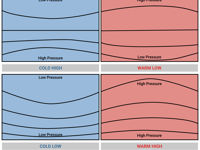
Refer to figure.
At approximately 18 000 feet (5500 meters), pressure patterns can resemble those at the surface, but they are significantly influenced by temperature differences. Near the surface, pressure levels always slope downward toward areas of low pressure. However, as altitude increases, temperature variations modify these pressure patterns, sometimes even reversing their slope.
In cases where a surface high-pressure system is associated with warm air and a surface low with cold air, the pressure gradient towards the low intensifies with height due to the denser, cold air compressing the isobaric surfaces. Conversely, when a surface high is linked to cold air and a surface low to warm air, the pressure slope can shift direction at higher altitudes, as cold air compacts the pressure levels.
This means that while surface high and low-pressure areas can extend to upper levels, they are not always directly correlated. Atmospheric conditions such as temperature and wind speed play a crucial role in modifying pressure patterns with altitude.
Your Notes (not visible to others)
This question has appeared on the real examination, you can find the related countries below.
-
Azerbaijan6


 Use Keyboard Shortcuts
