

Which of the following correctly describes a "bendable trim tab"?
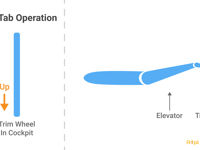
Refer to figure.
Although an aircraft can be operated throughout a wide range of attitudes, airspeeds, and power settings, it can be designed to fly hands-off within only a very limited combination of these variables, so without a system to compensate for these differences, the pilot would have to constantly apply the same control inputs to keep the aircraft flying straight and level. Trim systems are used to relieve the pilot of the need to maintain constant pressure on the flight controls, and usually consist of movable flight deck controls and small hinged devices attached to the trailing edge of one or more of the primary flight control surfaces.
Designed to help minimise a pilot’s workload, trim systems aerodynamically adjust the resting position (zero pilot input) of the flight control surface to which they are attached. Common types of trim systems include trim tabs, servo tabs, ground adjustable tabs, and a fully adjustable horizontal stabiliser.
Ground adjustable trim tabs: These trim tabs are not adjustable in flight, but can be adjusted on the ground, to correct a permanent out of trim condition. They are usually found on ailerons or rudders. They are pretty common on very light aircraft which might have a certain propeller slipstream effect or slight bend in the airframe. If the aircraft is rolling to the left in-flight more than it should, for instance, the aileron trim tabs can be bent on the ground so that the ailerons sit in a slightly different position naturally, and this trims them for future flights.
The ground adjustable trim tab is a fixed metal tab on a flight control which is adjustable on the ground to optimise the inflight characteristics of an aircraft.
Trim tabs in general are a bit counter-intuitive. If, for instance, you wanted to trim elevators to pitch up (the elevators deflected upwards to pitch the aircraft nose up), then the trim tabs are adjusted downwards. You have to think that the trim tab acts on the elevator, not on the aircraft. The trim tab deflecting downwards causes the elevator to be pushed upwards by the aerodynamic forces, and as the elevator is so much larger a control surface, it then has a constant nose-up effect on the aircraft.
Your Notes (not visible to others)
This question has appeared on the real examination, you can find the related countries below.
-
Austro Control1


 Use Keyboard Shortcuts
