

Neutral dynamic stability describes a system such as an aircraft that, after it has been disturbed from its trimmed position, will...
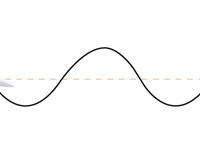
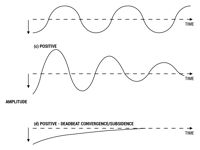
Refer to figures.
Static stability pertains to how a system reacts immediately when disturbed. In a statically stable system, when disturbed, it initially moves back toward its equilibrium state. An aircraft's type of static stability is defined by its initial reaction after some external force is removed. We use the term "static" because we're only concerned with the initial tendency to return to equilibrium, without considering subsequent motion.
Dynamic stability, on the other hand, covers what happens after this. An aircraft can only have any measurement of dynamic stability if it is first statically stable. Types of dynamic stability:
- Positive dynamic stability (dynamically stable) --> The oscillations will gradually reduce until the aircraft is back at equilibrium.
- Neutral dynamic stability --> The aircraft continues to oscillate either side of equilibrium by the same amount and at the same frequency (no damping).
- Negative dynamic stability (dynamic instability) --> The aircraft oscillations continue, and get larger in magnitude each time.
There are a couple of other niche forms and special types of dynamic stability, two of which shown in the second annex above, but they are unimportant to us at this level (and even barely mentioned at the ATPL level).
Your Notes (not visible to others)
This question has appeared on the real examination, you can find the related countries below.


 Use Keyboard Shortcuts
