

Tyre "creep" is…
-
A
the circumferential movement of the tyre in relation to the wheel rim.
-
B
the increase in inflation pressure due to decrease in ambient temperature.
-
C
a gradual decrease in the circumferential movement of the tyre due to wear.
-
D
the decrease in inflation pressure due to increase in ambient temperature.
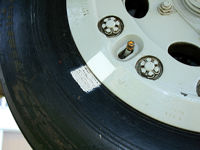
Refer to figure.
When tyres a first fitted to a wheel they have the tendency to move slightly around the rim, this is called “creep”. After some time, the tyre should be settled and this movement should stop. Most aircraft have creep markers on them, so when the pilot does the pre-flight inspection he can see whether the tyre has moved around the rim. In the figure you can see there is a white marker on the rim and the tyre which are aligned, once these are not aligned anymore this indicates the tyre has moved around the rim (creep).
Your Notes (not visible to others)
This question has appeared on the real examination, you can find the related countries below.


 Use Keyboard Shortcuts
