

What is the advantage of a hingeless rotor?
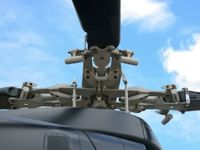
Refer to figure.
The four principal rotor hub designs are:
- Teetering
- Fully articulated
- Hingeless
- Bearingless
All designs must allow the blades to flap and feather, but not all require a lead-lad (dragging) hinge.
Freedom to feather is usually provided using feathering bearings and freedom to flap by flapping hinges.
The modern rotor head designs have replaced some or all the hinges and bearings with solid but flexible attachments points.
The hingeless rotor head design uses conventional hinges only for feathering. The other two movements, flapping and dragging (lead-lag), are accommodated by the rotor blades' flexible attachments to the hub, such as elastomeric bearings and plastic material at the root of the blades.
Thus, since fewer components are necessary by reducing the need of bearing and hinges, the need for oil and grease has been also reduced and, thus, maintenance. That’s why the hingeless rotor hub designs are called “dry”.
Your Notes (not visible to others)
This question has appeared on the real examination, you can find the related countries below.
-
Austro Control1


 Use Keyboard Shortcuts
