

Which of the following conditions would make it impossible for the human ear to equalize the pressure between the middle ear and the environment?
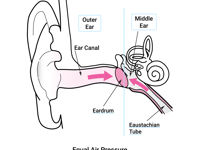
Refer to figure.
The Eustachian tube equalizes the air pressure between the throat and the middle ear. This ensures that the same pressure applies in both sides of the eardrum (outer and middle ear side). When we have a cold the Eustachian tube is blocked due to mucus and equalization is hard or impossible leading to pain in the eardrum and barotrauma.
The eardrum is a thin, flexible membrane that separates the outer ear from the middle ear. Air that comes to the eardrum from the outer ear side is environmental air and immediately adapts to pressure changes as we climb or descent. The air that exists from the other side of the eardrum is 'trapped' inside the middle ear and does not change pressure automatically. However, there is a tube that connects the middle ear to the back of the throat called the Eustachian tube. This tube is normally closed, and opens when necessary to help the middle ear adapt to any changes in atmospheric pressure.
Air that enters through our throat as we breath is environmental air that adapts to pressure changes as we climb or descent. When the Eustachian tube opens, it allows the air from the throat to enter the middle ear and causes the air of the middle ear to adapt to any pressure changes. This process ensures that the same pressure exists at both sides of the eardrum. When a pilot has a cold, the lining of the nose, throat, and Eustachian tube becomes inflamed and extra mucus is produced in these areas to trap viruses and debris. As a result, the mucus narrows or even blocks the Eustachian tube. This will make equalization of pressure between the throat and the middle ear slow or impossible.
- During descent, the eardrum will experience increased pressure from the outer ear side that will not be equalized on the other side (middle ear side). This may lead to barotrauma accompanied by severe pain in the eardrum and disorientation.
Barotrauma. Pain due to the expansion and contraction of air trapped in the cavities of the body (within the intestines, middle ear, sinuses or teeth). It can result in discomfort or severe pain that may impair a pilot’s ability to operate the aircraft safely.
Your Notes (not visible to others)
This question has appeared on the real examination, you can find the related countries below.
-
Greece3
-
Austro Control1


 Use Keyboard Shortcuts
