

Which of the following is the correct definition of presbycusis?
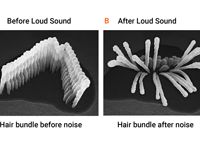
Refer to figure.
Presbycusis is age related hearing loss.
"Presby" at the start of a word means age related (from the Greek meaning old). We are concerned with two things age related when flying; presbycusis (presby = old, cusis = hearing. Literally old ears!) and presbyopia (presby = old, opia = vision. Old eyes!)
As we age, our bodies stop working as efficiently as they did when we were young, and we also start to suffer the cumulative effects of living. Hearing loss can be conductive hearing loss - where the sound waves are prevented from reaching the inner ear due to damage to any of the structures (eardrum or bones), a build up of ear wax or damage from infections, or it can be sensorineural hearing loss.
Presbycusis is generally sensorineural hearing loss, as the bundles of hairs in the inner ear that sense vibrations from sound waves become damaged over many years and can no longer conduct any sensory input. The figure illustrates damaged and undamaged hair bundles - the damaged bundles are practically useless and will not detect any sound. Different hair bundles detect different frequencies, so the hearing loss will not necessarily be immediately total, but some frequencies will decline before others. Higher frequencies are usually affected first.
This damage can be instant, for example a gunshot or explosion, or it can be cumulative, as with presbycusis - years of noise exposure cause increasing damage. This is why it is so important to protect your ears with headsets, ear plugs or other defensive things - once the hairs are damaged they will not recover!
Your Notes (not visible to others)
This question has appeared on the real examination, you can find the related countries below.
-
Czech Republic1


 Use Keyboard Shortcuts
