

When carburettor heat is selected by the pilot, what is the effect on the fuel-air mixture delivered to the engine?
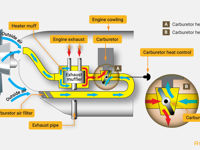
Refer to figure.
Carburettor heat introduces warm air from around the exhaust into the carburettor induction system to melt or prevent ice formation in the carburettor throat and venturi. The heated air has a lower density than the cold outside air it replaces because heating causes air to expand at constant pressure, reducing the mass per unit volume.
When the carburettor receives warm low-density air instead of cold dense air, the mass flow of air entering the engine per unit time is reduced. However the reduced mass of air receiving constant amount of fuel means the mixture becomes richer, because the same amount of fuel is being mixed with less air mass. Carburettor heat therefore consistently enriches the mixture, and in a normally aspirated engine it also causes an initial drop in RPM due to the reduced air density (less charge per cycle) and the reduced power output from the richer and less dense mixture.
If ice is present and melts, the RPM partially recovers but typically does not return fully to the original value because the air is now warm and less dense.
Will show an immediate increase in RPM if ice is present → INCORRECT. When carburettor heat is applied, the initial effect is always a DROP in RPM due to the reduced air density and the richer mixture. If ice was present and is melted by the heat, the RPM will partially recover from its heat-induced drop as the airflow obstruction clears.
Will richen the mixture because of the higher air temperature → CORRECT. Carburettor heat reduces the density of the induction air. The fuel metering system delivers approximately the same fuel volume regardless, resulting in more fuel relative to the reduced air mass. The mixture therefore becomes richer when carburettor heat is applied.
Will lean the mixture because of the greater volume of air through the venturi → INCORRECT. Heating air causes it to expand in volume, but this volume increase does not translate into a greater mass of air. In fact the opposite is true: the same volume of hot air contains less mass than cold air. The fuel metering system in a float carburettor responds primarily to pressure differential (volume flow) rather than mass flow, so the fuel flow does not reduce proportionally.
Will have no appreciable effect on the fuel/air mixture → INCORRECT. Carburettor heat consistently produces a measurable enrichment of the mixture due to the density reduction of the incoming air. This enrichment is significant enough to be detectable as a slight RPM change and is an important consideration in mixture management.
Your Notes (not visible to others)
This question has appeared on the real examination, you can find the related countries below.


 Use Keyboard Shortcuts
