

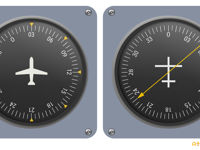
Refer to figure.
The pilot wants to proceed directly to the beacon. The wind is calm. The pilot should follow a QDM of...
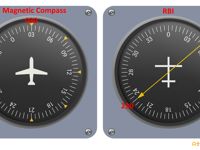
Refer to figure.
The instruments indicated are:
- A fixed card ADF or Relative Bearing Indicator (RBI), on the right side, and
- A Magnetic Compass, on the left side.
The RBI indicates the relative bearing 230º, which is the relative bearing measured from the aircraft's heading.
The Magnetic Compass indicates the magnetic heading 030º, which is where the nose of the aircraft points (the fore and aft axis).
To get a magnetic bearing to the station (QDM), add the magnetic heading to the relative bearing:
- QDM = MH + RB
With a fixed card ADF, the magnetic bearing of the beacon from the aircraft (QDM) is determined by the Pilot adding the aircraft's heading to the relative bearing:
- 230º + 030º = 260º
Your Notes (not visible to others)
This question has appeared on the real examination, you can find the related countries below.
-
Austro Control3
-
Czech Republic1
-
Iceland1
-
Romania1


 Use Keyboard Shortcuts
