

How will an anti-balance, or anti-servo, tab which is incorporated in a stabilator behave?
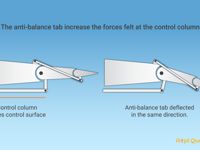
Refer to figure.
An anti-balance tab is mechanically linked to deflect in the same direction as the primary control surface. If the main control surface moves up, the small tab moves up too. This alignment generates aerodynamic resistance that opposes the pilot's input, effectively increasing control column forces. Because the aerodynamic force generated by the tab scales with velocity, it provides significant resistance at high airspeeds - preventing accidental overstressing of the airframe, while remaining minimal at low airspeeds to ensure the aircraft remains highly manoeuvrable.
Your Notes (not visible to others)
This question has appeared on the real examination, you can find the related countries below.


 Use Keyboard Shortcuts
