

In a steady power-on descent, which of the following will happen if engine power is increased?
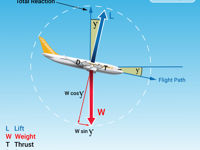
Refer to figure.
The figure illustrates the forces in a steady power-on descent.
The force of Weight is split into two components. One component (W cos γ) acts perpendicular to the flight path and is balanced by Lift, while the other component (W sin γ) acts forward along the flight path and ‘adds’ to the Thrust, and these combines forces are balanced by Drag acting backwards along the flight path.
This means that drag must always be greater than thrust in a steady descent, and the excess drag (drag - thrust) is what decides the angle of descent. The greater the excess drag, the steeper the descent.
If the aircraft performs a glide descent, this means that the maximum descent angle will be flown, as there is no thrust, so the excess drag is simply the full drag force. If, however, a power-on descent is flown, the excess drag will be decreased as there is some thrust acting forwards along the flight path.
If the thrust is increased during the descent, but the speed is kept constant, this means that the drag remains constant, this means that the excess drag will decrease, and therefore the angle of descent must decrease. This means that the rate of descent will decrease.
In more pilot-like terms, it is evident that if you apply more power during the descent, you will either speed up in the descent, or will have to pitch up slightly to avoid speeding up (as per the question, and therefore lessen the descent angle, and decrease the rate of descent.
Your Notes (not visible to others)
This question has appeared on the real examination, you can find the related countries below.


 Use Keyboard Shortcuts
