

When inspecting a spark plug removed from a piston engine and dry black powdery carbon deposits are found on the firing end, what operating condition does this appearance most likely?
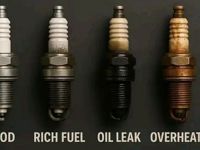
Refer to figure.
Spark plug inspection is a routine maintenance and diagnostic procedure that provides valuable information about combustion conditions within individual cylinders. The appearance of deposits on the firing end of a spark plug serves as a direct indicator of what has been occurring in the combustion chamber. Each type of deposit has a characteristic appearance linked to a specific cause.
Dry, black, powdery carbon deposits are the classic signature of a rich mixture condition. When the fuel-air mixture is excessively rich, there is insufficient oxygen to completely combust all of the fuel carbon. The unburned carbon particles are deposited on the cooler surfaces of the combustion chamber, including the spark plug electrodes and insulator, forming a dry black powdery coating. This condition is associated with incorrect mixture management, prolonged ground running at rich mixture, a faulty mixture control, or a flooded carburettor.
Wet black deposits with an oily appearance, by contrast, indicate oil contamination from worn piston rings or valve stem seals.
Water in the fuel would not typically produce black carbon deposits but would manifest as corrosion, pitting, or white deposits.
The presence of water in the fuel → INCORRECT. Water in fuel typically causes misfiring, rough running, and potential engine stoppage, and any residual deposits would manifest as white crystalline or corrosive deposits.
That oil is slipping past the piston rings and is being burnt in the combustion chamber → INCORRECT. Oil burning in the combustion chamber does produce carbon deposits on spark plugs, but these are characteristically WET, oily, and dark rather than dry and powdery. Oil-fouled spark plugs have a wet sooty appearance because the oil does not fully combust and leaves a oily carbonaceous residue.
That the engine has been operated with too rich a mixture → CORRECT. Dry black powdery carbon deposits are the diagnostic signature of excessively rich mixture operation. An overly rich mixture provides more fuel carbon than there is oxygen to combust, leaving unburned carbon particles that settle as dry black powder on the spark plug firing end.
Your Notes (not visible to others)
This question has appeared on the real examination, you can find the related countries below.


 Use Keyboard Shortcuts
