

Which landing site (no wind) prevents the impairment of the ground effect?
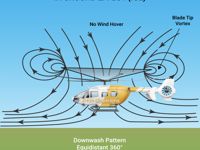
Refer to figure.
In a still air hover, the airflow through the rotor disc begins at zero velocity above the disc and is accelerated by the rotors through the disc into the air below. Acceleration starts well above the rotor and continues through and slightly beyond it until the air is outside the influence of the high pressure region under the blades. Thereafter the airflow diverges and slows down as it loses energy to the surrounding air.
When the helicopter hovers close to the ground, the downwash meets the ground and is forced to diverge more sharply, this increases the pressure in the wake below the helicopter. The increased pressure opposes and thus reduces the induced flow.
Factors affecting ground effect:
- Slope: air flows downhill leading to an uneven, reduced ground effect.
- Nature of the ground: Rough ground tends to dissipate the air below the helicopter, reducing the divergent duct effect, reducing the effectiveness of the ground effect.
- Hover height: Ground effect reduces with increasing height and is negligible above one rotor diameter distance from the ground
- Wind: Ground effect tends to be displaced downwind, however the translational lift due to wind is beneficial for reduction of power required.
Factors affecting ground effect positevly:
- Flat hard survaces (concrete ground): forces air below the helicopter to diverge more sharply increasing the ground effect.
Your Notes (not visible to others)
This question has appeared on the real examination, you can find the related countries below.
-
Austro Control1


 Use Keyboard Shortcuts
